Poisoning and contamination
Fever DreamPoisoning and contamination are the novel’s connecting environmental threat: what first appears to be an isolated illness becomes a pattern involving water, animals, agricultural land, and children across the town. David’s childhood exposure at a stream is the first explicit human crisis. Years later, illness returns amid animal disappearances, plastic drums at a shed, and a waiting room filled with affected children. The account does not identify a chemical or establish a complete exposure pathway; instead, it accumulates linked observations until the poison seems less like a single accident than a condition already embedded in local life.
First Exposure and the Stream
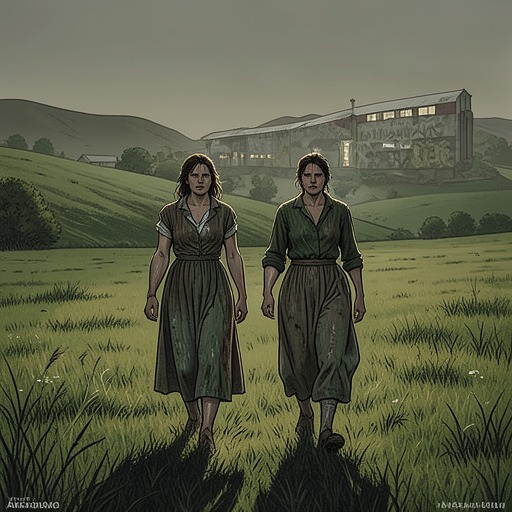
Several years before the events involving Amanda and Nina, Carla had recently begun her first job, doing paperwork at Sotomayor’s farm. At home, Omar was breeding horses, and the family’s prospects were tied to the value of the animals. When a prized stallion disappeared, Carla searched outside with David, who was still very young. They found it drinking from a stream in a hollow, out of sight of the house. David had followed them to the water; while Carla tried to lead the horse back, he knelt by the stream, soaked his shoes, and sucked water from his fingers.
A dead bird lay only a step from David. Carla shouted when she saw it, frightening him; he fell backward, and she struggled to bring both her child and the reluctant horse back up the hill. She did not tell Omar about the episode, considering the immediate problem over. The next morning, however, the stallion was gravely ill, with its eyes and mouth swollen. Its condition made Carla fear that whatever had sickened it was also in David’s body. This sequence supplies a concrete, troubling connection among the stream, the dead bird, the horse, and the child, though it does not name a contaminant or independently prove the precise route of exposure.
Emergency Knowledge and Limited Care
Carla’s fear is shaped by the distance between a crisis and formal medical help. She says local doctors summoned to the clinic take hours to arrive and cannot help in serious cases; people sometimes turn instead to the woman at the Green House. When the horse became ill, Carla believed David could have only hours, perhaps minutes, before he needed help breathing. She went to the woman carrying him rather than waiting for a rural doctor, convinced that the child had encountered what the horse had drunk.
The woman first gave Carla water and waited until she had calmed down. She watched David play, examined him closely, and then said the horse was already dead and that David had only hours, perhaps a day, before his breathing would be affected. She identified the danger as poison and warned that it would attack his heart. The episode presents local knowledge as a response to a medical system Carla regards as slow and ineffective, not as proof of an identified substance or a comprehensive remedy. The distinction matters: the diagnosis gives Carla a way to act, while the source and reach of the poison remain outside her control.
Land, Animals, and Recurring Loss
The poisoning pattern is accompanied by losses among animals. Omar’s livelihood depends on horses: he breeds them, arranges to borrow a stallion, and expects a share of the money when the foals are sold. The sick stallion is therefore both a family asset and a warning. Years later, Omar wakes Carla before dawn with the words that the horses are gone. Their bedroom door, which Omar remembers locking, is open; David’s room is open too, and the front door stands open. Outside, every horse has vanished except a four-month-old foal, left alone in the pasture.
Omar approaches the foal and tries to coax it, but it does not move. It remains where it is until morning, including while a police inspector and two assistants come and go. Carla watches from the window and cannot bring herself to go outside. The account does not explain the disappearance or explicitly establish that contamination caused it. Yet the missing herd follows the earlier sickness of the stallion and later joins the death of the horses, a dog, and ducks in Carla’s attempt to understand the town’s accumulating losses. Animals are not merely background: their illness and disappearance register danger before its full human consequences are understood.
Drums and the Human Toll
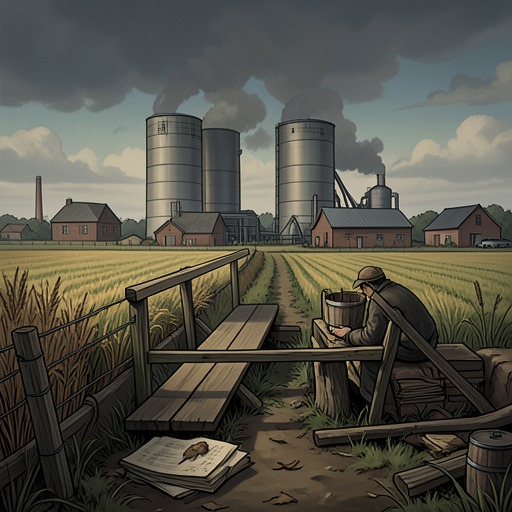
During a later visit to the area adjoining Sotomayor’s land and the abandoned Omar’s stables, a truck arrives as Carla is trying to persuade the others to go with her. Men put on long plastic gloves and unload large plastic drums from the full truck. One drum is left alone in the doorway of a shed. The scene gives contamination a material presence—containers, protective gloves, and an agricultural setting—but does not state what the drums contain or show them being connected conclusively to the earlier stream or to any particular illness.
The human pattern is clearer in its effects than in its mechanism. Amanda and Nina are poisoned, yet the people caring for them give them treatment for sunstroke. The narrator insists that the poisoning’s effects come and go, and asks why the nurse’s son and the children visiting the room are not recognized as poisoned. The account distinguishes children who experience poisoning episodes from those said to have been born already poisoned, through something their mothers breathed, ate, or touched. No particular substance, exposure history, or medical confirmation is supplied for each child, but the contrast expands the crisis beyond an isolated incident: harm may be acute, intermittent, or present from birth.
A Community Without Adequate Protection
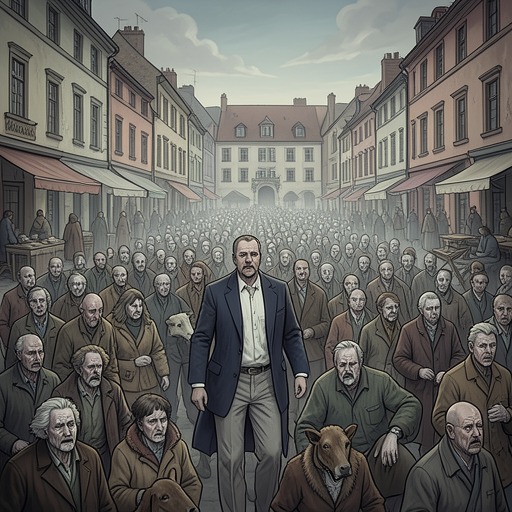
The waiting room makes the scale of the problem visible through a group of thirty-three children, a number the narration says changes. Many are described as visibly different, including children without eyelashes or eyebrows and with pink, scaly skin; only a few are said to resemble Nina more closely. These observations are presented through an overwhelmed, poisoned narrator, so they convey the scene’s disturbing impact without establishing a diagnosis for each child. The woman at the Green House does what she can, the narration says, while doctors are absent. Care is therefore uneven and fragile: local residents have developed ways to seek help, but neither those responses nor the clinic appears adequate to the scale of the need.
When Carla visits Amanda after she has been brought back to the emergency clinic, seven hours have passed since Amanda fainted and more than a day since the poisoning. Carla connects the children in the waiting room with the horses, dog, and ducks that have died, and with the son who is no longer her son but continues to live in her house. She believes that her own role in changing Amanda from one body to another altered something small and invisible and ruined everything. The narrator rejects Carla’s self-blame: the cause is something worse. This exchange links environmental harm to the novel’s other disturbances without making Carla responsible for the poisoning.
Meaning of the Poison
The recurring evidence moves from one exposed child and one sick horse toward a town where animal loss, human illness, and children’s conditions coexist. The narrative offers distinct clues—a stream, a dead bird, agricultural land, drums, and symptoms—but withholds a fully verified causal chain. That withholding keeps suspicion from becoming a neat technical explanation, while making the failure of timely care part of the danger: residents must interpret events for themselves as the clinic is described as distant and ineffective.
At the end of the account, the poison is not framed as a new intrusion. The narrator tells David that it was always there. The phrase recasts the earlier episodes: the stream was not necessarily the whole source, the visible drums do not settle the question, and the later wave of illness is not presented as contamination suddenly arriving. Poisoning and contamination signify an enduring condition whose reach may be hidden, delayed, or already present at birth, while the people most visibly affected—children and local families—have the least reliable access to protection and explanation.